
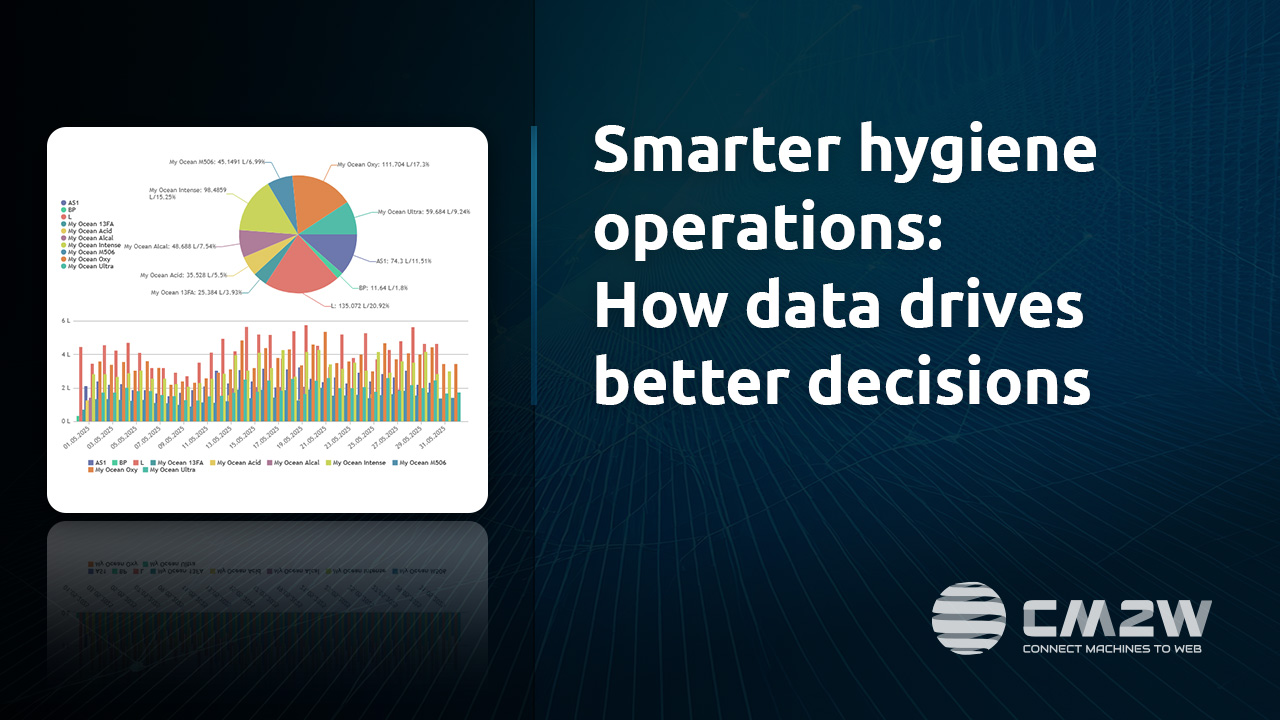
In today’s hygiene market – and across every industry – guesswork is no longer good enough. With growing pressure for efficiency, compliance, and quality, data has become the most reliable tool for making the right decisions at the right time.
While intuition-based decisions rely on gut feeling and personal experience, data-driven decision-making uses facts, metrics, and real-time analysis. That’s why more hygiene businesses are turning to data and Internet of Things (IoT) to improve reliability, reduce waste, and boost performance.
The cost of not using data
Without access to accurate data, hygiene operations fall into a cycle of reactive management. From chemical overdosing and product waste to equipment failures and chemical stockouts, the consequences of working blindly are costly.
However, by collecting data from IoT-enabled dosing systems and advanced smart sensors like temperature sensors and level sensors, hygiene businesses gain the visibility they need to act quickly and optimize resources for better performance.
What kind of data matters in hygiene operations?
While many types of data offer value, the following metrics make a real impact in industrial hygiene operations:
Flow rates
Flow rate data helps you ensure proof of delivery and identify abnormal flow patterns, giving you the chance to investigate and resolve problems – like peristalsis wear, backpressure changes, or pump malfunctions – before they cause dosing errors or downtime.
Pump activity
Pumps are the heart of dosing. Let’s say a system detects that a particular pump is delivering less chemical than expected. Real-time data allows the technician to inspect the issue to avoid failed wash cycles, product loss, or client complaints.
Chemical level and consumption
Monitoring chemical level and usage by type, cost, and timeframe gives insight into trends, helps manage chemical inventory and deliveries more effectively, and prevents unexpected shortages.
Wash cycle temperature
Temperature is crucial for both washing quality and disinfection. By tracking wash temperatures and heating rates during the washing cycle, you can ensure efficient stain removal and disinfection and quickly detect issues like machine malfunctions. What’s more, this data enables the delivery of certain chemicals at predefined target temperatures to ensure optimal chemical activation during each stage of the wash cycle.
Total washed quantity
Knowing the total volume of laundry processed per site or system provides a clear picture of equipment productivity. It supports ROI evaluations and helps pinpoint high- and low-performing sites to better guide your optimization and growth strategy.
Program performances
Tracking program usage reveals how often each wash cycle is run, the volume of laundry processed, and the chemical cost per program. This helps assess workload distribution across machines and locations and uncover seasonal patterns or shifts in demand.
Machine efficiency
This data presents how well each dosing system is utilized. If one system is overworked while another is idle, you can rebalance the load and improve system-wide efficiency.
From data to strategic insights
Data alone isn’t enough – what matters is what you do with it. With platforms like CM2W’s IoT management system, users can view detailed reports, set alerts, analyze trends, and compare performance across sites.
This turns raw numbers into strategic actions – scheduling timely maintenance, replacing faulty parts, optimizing chemical use and delivery, improving washing quality, and increasing customer satisfaction.
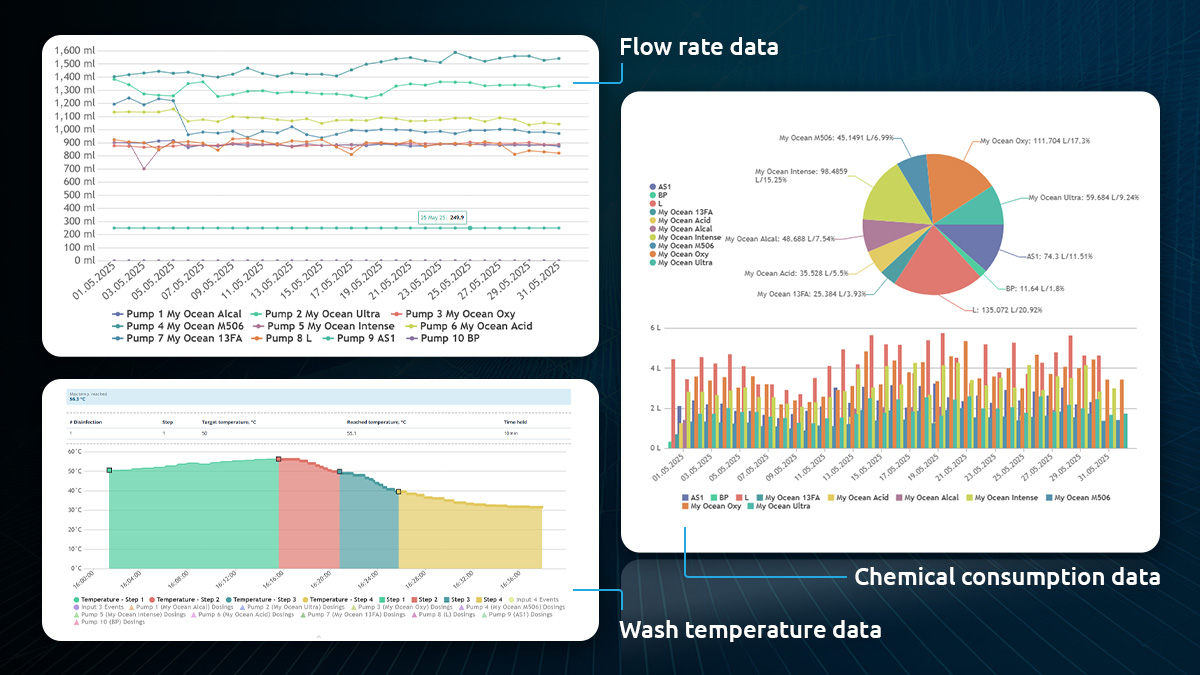
Live visualization of operational data captured from IoT-enabled dosing systems and sensors, displayed through CM2W’s centralized management platform.
From data to metric-driven actions
Data from machines, systems, and sensors becomes even more powerful when paired with predefined thresholds – limits for key parameters like flow rate or chemical levels. When values move outside these limits, the system triggers alerts. This helps teams spot issues early, so they can take action before problems cause downtime.